
What is an MRI Scan?
MRI is an advanced imaging technique that produces detailed cross-sectional images of the body. It helps doctors examine soft tissues that cannot be clearly seen with X-rays or CT scans.
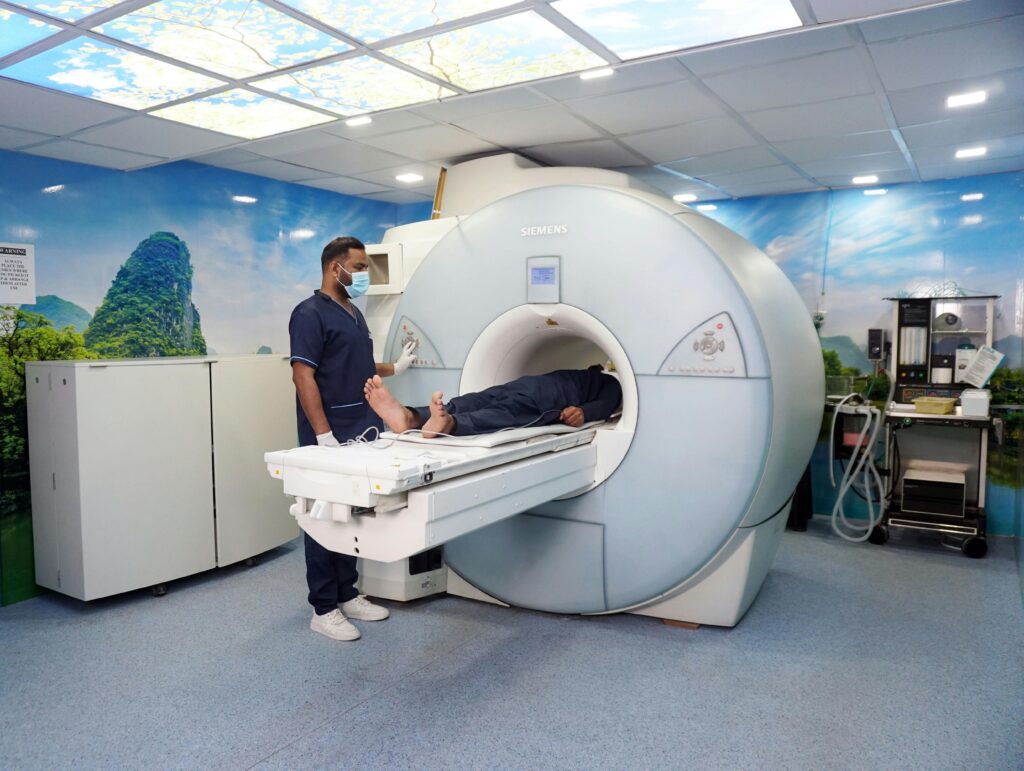
During the scan, the patient lies on a table that moves into a large magnetic scanner. The machine captures images from different angles, allowing doctors to analyze internal structures in detail.
Types of MRI Scans
Different types of MRI scans are used depending on the part of the body being examined:
Brain MRI
Used to diagnose brain tumors, stroke, infections, and neurological disorders.
Spine MRI
Helps detect slipped discs, spinal injuries, and nerve compression.
Joint MRI
Used for knee, shoulder, ankle, and ligament injuries.
Abdominal MRI
Examines organs such as the liver, kidneys, pancreas, and spleen.
Cardiac MRI
Used to evaluate heart structure and function.
Pelvic MRI
Helps diagnose conditions related to reproductive organs and urinary system.
When is an MRI Recommended?
Doctors may recommend an MRI scan if you experience:
• Severe headaches or neurological symptoms
• Persistent back pain
• Joint injuries or ligament damage
• Suspected tumors or infections
• Stroke symptoms
• Unexplained abdominal pain
• Nerve problems or numbness
MRI helps identify the exact cause of these conditions.
Benefits of MRI Scan
 Provides highly detailed images of soft tissues Helps diagnose diseases early Non-invasive and painless procedure No radiation exposure Helps doctors plan effective treatment Useful for monitoring treatment progress
How MRI Scanning Works
The MRI machine uses a powerful magnetic field and radiofrequency signals to capture images of the body. The scanner detects signals from body tissues and converts them into detailed images that doctors analyze.
The entire scan usually takes 20 to 60 minutes, depending on the area being examined.
Preparation for an MRI Scan
Before an MRI scan, follow these precautions:
• Remove all metal objects (jewelry, watches, belts)
• Inform the technician if you have metal implants or pacemakers
• Wear comfortable clothing without metal parts
• Some MRI scans may require fasting
• Inform the doctor if you are pregnant
Is MRI Safe?
MRI is generally considered very safe because it does not use harmful radiation. However, patients with certain metal implants or pacemakers must inform their doctor before undergoing the scan.
Why Choose House of Lab Test?
Advanced diagnostic imaging services Experienced radiology professionals Accurate and reliable reports Affordable diagnostic services Patient-friendly testing process Fast report delivery