
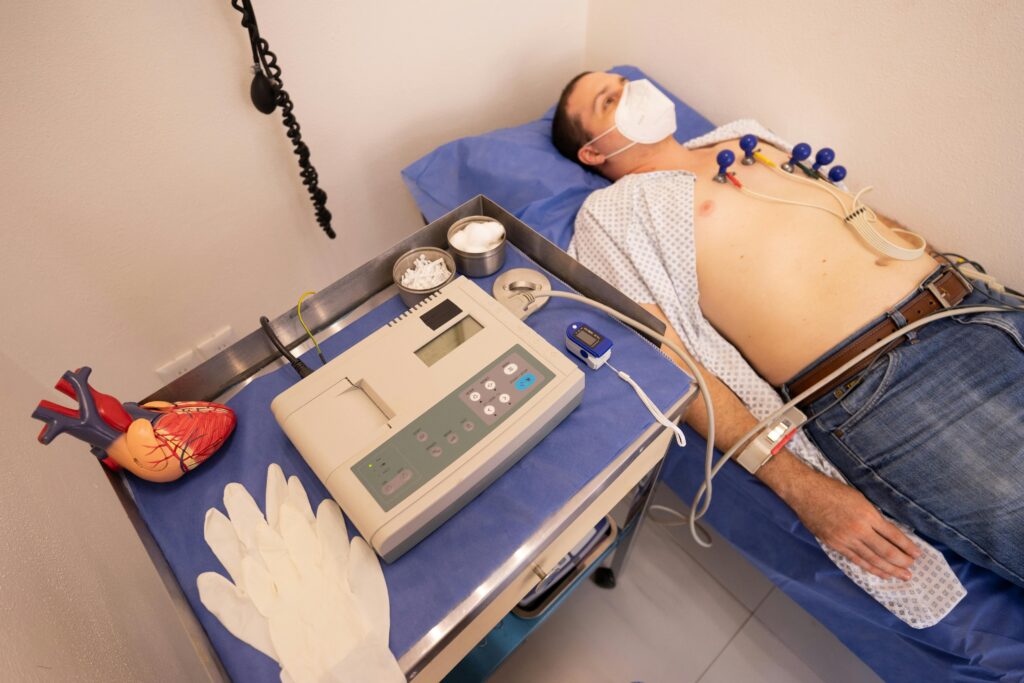
What is an ECG Test?
An ECG test records the electrical signals that control heartbeats. Every time the heart beats, electrical impulses travel through the heart muscles. An ECG machine detects these signals and displays them as waves on a monitor or printed report.
Doctors analyze these wave patterns to identify abnormalities in heart rhythm or structure.
Why is an ECG Done?
Doctors recommend an ECG test to diagnose or monitor various heart-related conditions such as:
• Irregular heartbeat (arrhythmia)
• Chest pain or discomfort
• Suspected heart attack
• Heart disease monitoring
• Shortness of breath
• Dizziness or fainting
• High blood pressure-related heart problems
An ECG helps doctors understand how well the heart is functioning.
Types of ECG Tests
There are different types of ECG tests depending on the patient’s condition.
Resting ECG
Performed while the patient lies still on a bed. This is the most common ECG test.
Stress ECG (Treadmill Test)
Measures heart activity while the patient walks or runs on a treadmill.
Holter Monitoring
A portable ECG device worn for 24–48 hours to monitor heart rhythm continuously.
Benefits of ECG Test
 Quick and painless procedure Detects heart rhythm problems Helps diagnose heart attacks Monitors heart health and treatment Identifies electrical abnormalities in the heart Helps doctors plan appropriate treatment
How the ECG Test is Conducted
At House of Lab Test, ECG testing follows a simple process:
Step 1 – Preparation
The patient lies down comfortably while the technician prepares the chest area.
Step 2 – Electrode Placement
Small sensors called electrodes are placed on the chest, arms, and legs.
Step 3 – Recording Heart Activity
The ECG machine records electrical signals of the heart for a few minutes.
Step 4 – Report Generation
The recorded data is printed as a graph, which doctors analyze for abnormalities.
The entire ECG test usually takes 5–10 minutes.
Precautions Before ECG Test
• Wear comfortable clothing
• Avoid applying lotions or oils on the chest
• Inform the technician about any heart medications
• Stay relaxed during the test for accurate results
Is ECG Safe?
Yes, ECG is completely safe and non-invasive. It does not use radiation or electricity that enters the body. The electrodes only record electrical signals from the heart.
Why Choose House of Lab Test?
Experienced diagnostic professionals Accurate ECG reports Affordable heart health testing Modern diagnostic equipment Convenient testing services Fast report delivery
houseoflabtest.in | prlword.com